
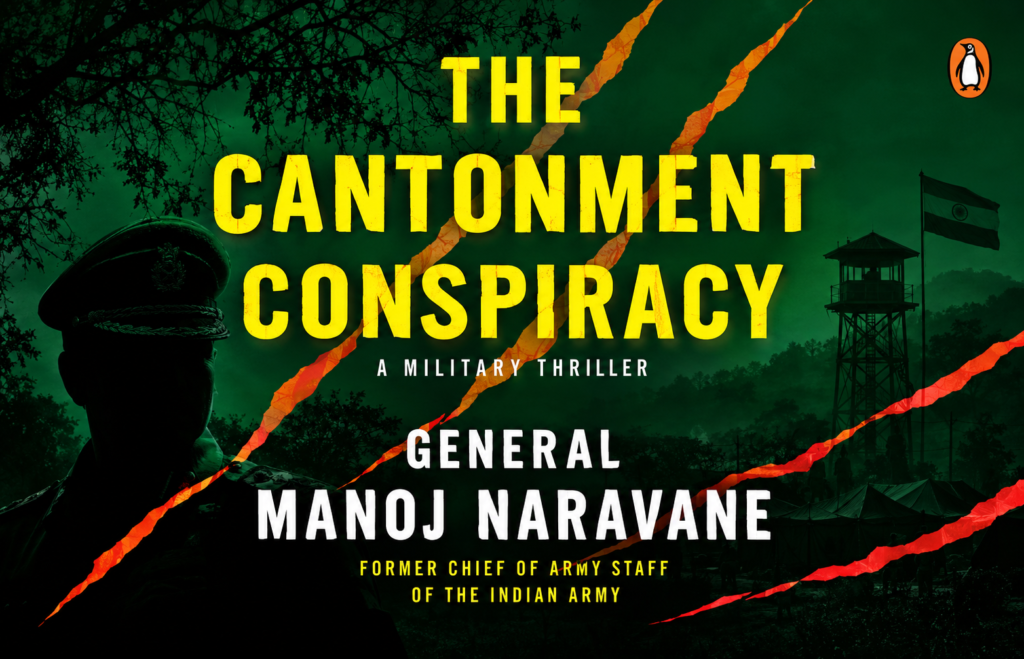

The Cantonment Conspiracy by General Manoj Mukund Naravane is a gripping military thriller that combines mystery, suspense, crime, and the complex realities of life in the Indian Army. Written by the former Chief of Army Staff, the novel offers readers an engaging glimpse into military culture, discipline, hierarchy, and the responsibilities that come with wearing the uniform.
Rather than focusing solely on warfare and battlefield heroism, Naravane explores the challenges that can emerge within a military establishment itself. Through a murder investigation involving young officers, the author examines questions of integrity, justice, loyalty, and the importance of uncovering the truth, even when it is uncomfortable.
Summary of the Book
The story is set in a military garrison on the banks of the Ganga in western Uttar Pradesh. It revolves around two newly commissioned officers, Lieutenant Rohit Verma and Lieutenant Renuka Khatri, who have recently graduated from the National Defence Academy (NDA).
Rohit comes from a family with a long tradition of military service. Having grown up around the armed forces, he is familiar with military customs and expectations. Renuka, on the other hand, comes from a civilian background and belongs to the first batch of female cadets admitted to the NDA. As they begin their careers, both must prove their abilities and establish their place within the military establishment.
The plot takes a dramatic turn during a welcome party at the officers’ mess, where a woman is assaulted and Rohit becomes the prime suspect. A formal court of inquiry is initiated to investigate the incident. Renuka, who participates in the inquiry, discovers important evidence that raises doubts about the accusations against Rohit and suggests that the incident may be connected to something much more serious.
The mystery deepens when a witness who is expected to testify before the inquiry is murdered. This development clears the way for a wider investigation into the events surrounding the assault. As the commandant becomes involved, the investigation begins to reveal troubling connections with incidents from the past.
With the assistance of Rehmat, a local village girl who has her own connections to Rohit, the two officers pursue the truth. What initially appears to be an isolated incident gradually develops into a dangerous investigation involving hidden motives, betrayal, and secrets buried within the cantonment. Rohit, Renuka, and Rehmat must work together to identify the culprit before another crime takes place.
The novel builds its suspense through the gradual revelation of clues and the changing perceptions of the characters, keeping readers curious about the identity of the real criminal and the motive behind the crimes.
Major Themes
1. Justice and Integrity
One of the central themes of the novel is the pursuit of justice. Rohit’s predicament demonstrates how quickly suspicion can damage a person’s reputation, particularly within an institution where discipline and honour are highly valued. The investigation highlights the importance of evidence, impartiality, and the willingness to question initial assumptions.
2. Women in the Armed Forces
Renuka Khatri is one of the most significant characters in the story. As a woman entering a traditionally male-dominated military environment, she must establish her competence through determination, intelligence, and professional commitment. Her role in the investigation challenges stereotypes and emphasises that leadership and courage are not determined by gender.
3. Military Life and Brotherhood
The novel provides an insight into the traditions, hierarchy, camaraderie, and discipline of the Indian Army. The cantonment becomes more than a setting; it is a close-knit community where personal relationships and professional responsibilities often intersect. The story also reveals how difficult it can be to confront wrongdoing when loyalty to colleagues and the institution is involved.
4. Secrets, Betrayal, and Accountability
As the investigation progresses, the characters discover that appearances can be misleading. The novel explores how past events can influence the present and how concealed truths may eventually threaten individuals and institutions alike. It suggests that protecting an institution’s honour should never mean concealing misconduct.
Writing Style and Characterisation
General Naravane’s writing benefits from his extensive military experience. His familiarity with the functioning of the armed forces lends authenticity to the setting, including the officers’ mess, the court of inquiry, military customs, and the relationships between officers and other personnel.
The language is accessible and direct, making the book suitable for readers who may not have extensive knowledge of military terminology. The plot moves at a steady pace, with successive developments encouraging readers to continue reading. The combination of investigative elements and military detail distinguishes the novel from a conventional crime thriller.
Renuka stands out because of her intelligence, determination, and willingness to pursue evidence despite the challenges around her. Rohit represents the expectations and pressures associated with a family legacy of military service, while Rehmat adds a civilian perspective to the investigation. Together, these characters bring different experiences and motivations to the story.
The military setting is particularly interesting because it reveals a side of army life that is rarely explored in popular fiction. At the same time, the story remains focused on a mystery that can be followed without specialist knowledge of the armed forces.
Critical Evaluation
One of the greatest strengths of The Cantonment Conspiracy is its distinctive setting. By placing a crime thriller within a military cantonment, Naravane creates an atmosphere in which discipline, hierarchy, reputation, and personal relationships all influence the investigation. His professional background adds credibility to the military environment and makes the narrative especially interesting for readers curious about the inner workings of the Indian Army.
The book also deserves appreciation for presenting Renuka as an active and capable investigator rather than a secondary character. Her determination gives the story energy and makes the novel relevant to contemporary discussions about women’s roles in the armed forces.
However, readers looking for a deeply psychological thriller may find that some characters could have been explored in greater depth. Certain developments and revelations might also benefit from more detailed treatment to make the emotional impact of the mystery stronger. Nevertheless, the straightforward writing and suspenseful storyline make the novel an accessible and enjoyable read.
Conclusion
Overall, The Cantonment Conspiracy is an engaging military thriller that successfully blends crime, suspense, and the realities of military life. General M. M. Naravane uses his professional experience to create a convincing setting while weaving a mystery around justice, accountability, and the courage required to question appearances.
The novel is particularly appealing because it moves beyond conventional tales of military bravery and examines the moral challenges that can arise within an institution built on honour and discipline. Although certain characters and plot developments could have received more extensive treatment, the book remains an interesting read for fans of crime fiction and military-themed stories.
I would recommend The Cantonment Conspiracy to readers who enjoy Indian thrillers, investigative mysteries, and stories featuring strong, determined protagonists. It is also a worthwhile choice for those interested in learning more about military culture through fiction. A readable and intriguing military thriller that combines an unusual setting with suspense, investigation, and questions of integrity.
For more Book reviews visit us at amarasage.com