
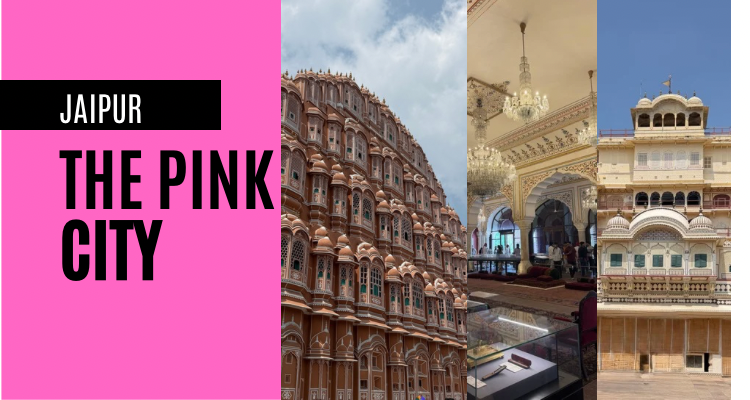

There is something almost theatrical about arriving in Jaipur.
The city seems to reveal itself slowly—first through the warm terracotta facades, then through the silhouettes of domes and palace walls, the rhythmic clatter of bazaars, the bright sweep of traditional textiles, and finally through the golden light that settles over the city as evening approaches. Jaipur is often called the Pink City, but to experience it is to discover a city painted in many more colours: sandstone and saffron, turquoise and indigo, gold and crimson.
Founded in 1727 by Maharaja Sawai Jai Singh II, Jaipur was conceived as a royal capital with an unusually sophisticated urban plan. Wide streets, organised marketplaces and carefully designed neighbourhoods reflected both political ambition and an appreciation for science, architecture and aesthetics, thus giving the Jaipur royal experience. Nearly three centuries later, the city remains an extraordinary meeting point between the world of the Maharajas and the restless energy of contemporary India.
The Pink City
The story of Jaipur’s distinctive colour is now part of its mythology. In 1876, when the Prince of Wales visited the city, Maharaja Sawai Ram Singh II ordered Jaipur to be painted in a terracotta-pink shade as a gesture of hospitality. The colour remained, becoming one of the city’s defining visual signatures.
But Jaipur’s old city is more than a collection of pink buildings. Walk through its streets and the architecture begins to feel almost cinematic. Ornate balconies overlook busy roads; ancient temples stand beside jewellery stores; cycle rickshaws weave through traffic while shopkeepers display rows of textiles, handicrafts and gemstones.
The Grandeur of Amber
A short journey beyond the bustle of the city leads to Amber Fort, perched dramatically on the Aravalli hills.
Approaching the fort, its massive sandstone walls appear to rise naturally from the landscape. Inside, however, the imposing exterior gives way to courtyards, gardens, marble details and intricate ornamentation. The Sheesh Mahal, or Hall of Mirrors, is particularly striking, where countless tiny pieces of mirrored glass create an effect that must have seemed magical in an age before electric illumination.
Amber is a reminder that Rajasthan’s royal architecture was designed not merely to impress but to create an entire experience—one in which power, beauty, defence and ceremony existed side by side.
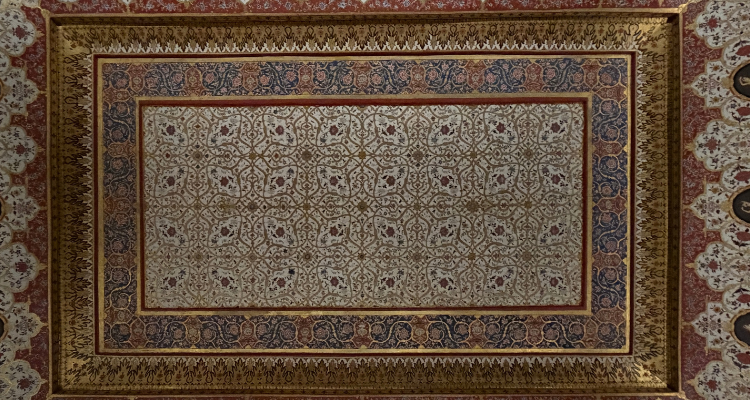
Standing within its courtyards, it is easy to imagine the movement of royal processions, musicians and courtiers through these same spaces centuries ago.
City Palace
Back in Jaipur, the City Palace continues that story of royalty.
The palace complex combines Rajput, Mughal and European influences, reflecting the changing cultural and political landscape of the region. Its courtyards and elaborately decorated gateways lead into museums and royal spaces containing textiles, manuscripts, weapons and objects associated with Jaipur’s former rulers.
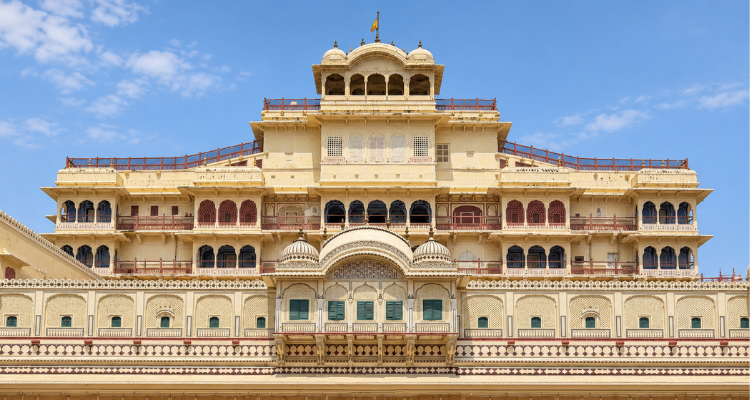
Yet what makes the palace fascinating is not simply its grandeur. It provides a window into the sophisticated world that existed behind the walls of the royal court—a world of ceremony, craftsmanship, diplomacy and patronage.
Hawa Mahal.
The Architecture of Air.
The Hawa Mahal is one of those buildings that seems almost too delicate to be real.Its honeycomb-like facade is punctuated by hundreds of small windows and openings, creating an intricate screen of sandstone. Built in 1799, the structure was designed to allow royal women to observe the life of the city while remaining largely unseen themselves.
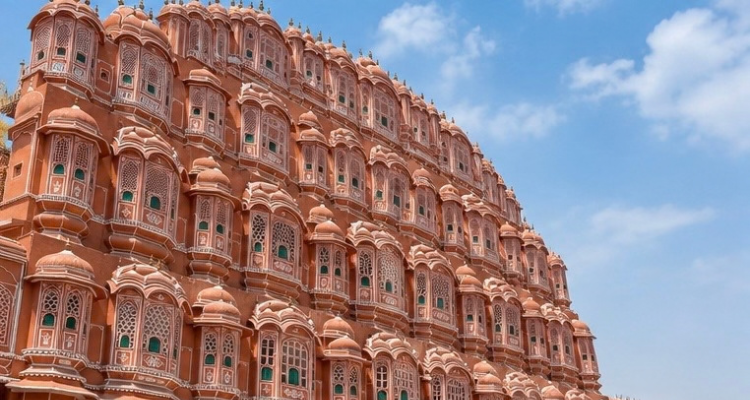
But the building’s name—Palace of Winds—captures another aspect of its design. The numerous openings allow air to circulate through the structure, making it remarkably suited to Jaipur’s climate.
Seen in the soft morning light, Hawa Mahal feels less like a monument and more like a piece of jewellery attached to the city.
The Art of Everyday Life
If the palaces reveal Jaipur’s royal past, its markets reveal its living culture.
In Johari Bazaar, the sparkle of gemstones and jewellery competes with the colours of traditional clothing. Bapu Bazaar offers textiles, handicrafts and souvenirs, while smaller lanes reveal workshops where traditional techniques continue to survive.Jaipur’s blue pottery, block printing, tie-and-dye textiles and handcrafted jewellery are not simply tourist commodities. They represent artistic traditions passed through generations.
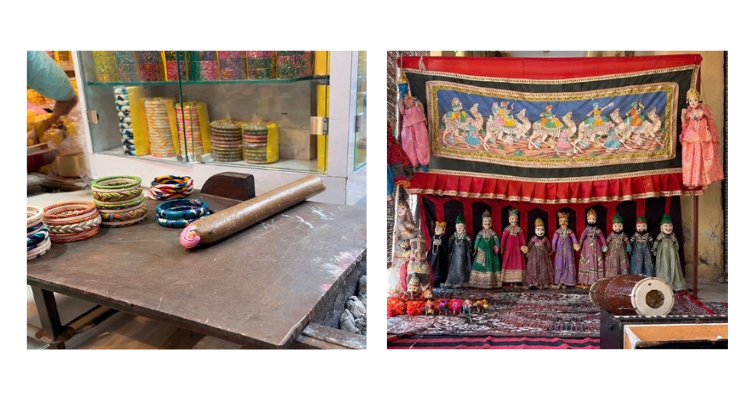
There is a particular pleasure in watching artisans work with techniques that predate the modern city around them. Their hands carry knowledge that rarely exists in books—it lives through repetition, patience and practice.
A Taste of Rajasthan
No portrait of Jaipur would be complete without its food.
A traditional Rajasthani meal is an experience of texture, spice and abundance. Dal baati churma remains the classic emblem of the cuisine: baked baati accompanied by dal and the sweet, crumbly richness of churma.There are also earthy dishes such as gatte ki sabzi and ker sangri, alongside bajre ki roti and an array of chutneys and pickles. In the city’s bustling lanes, kachoris and samosas provide a more casual introduction to Jaipur’s culinary culture, while ghewar and rabri offer a sweet conclusion.The food reflects the landscape and history of Rajasthan—resourceful, intensely flavoured and deeply rooted in tradition.
Beyond the Monuments
Perhaps the greatest pleasure of Jaipur is discovering that its culture extends far beyond its famous landmarks.It appears in the music of folk performers, in the swirling colours of traditional clothing, in the rhythms of festivals such as Teej, and in the stories exchanged over cups of chai. It can be found in the craftsmanship of a jeweller, the designs of a block printer and the hospitality of a family-run shop.At the same time, Jaipur is not frozen in the past. Contemporary cafés, galleries, restaurants, design studios and cultural festivals have added new layers to its identity. The Jaipur Literature Festival, for instance, has transformed the city into an international meeting place for writers, readers and thinkers.
This coexistence of old and new is perhaps Jaipur’s greatest strength as a cultural destination.
When the City Turns Gold.
Towards evening, Jaipur changes.The heat softens. The streets become busier. The sandstone facades catch the fading sunlight, and the pink of the old city begins to turn amber. From the higher points around the city, the landscape stretches towards the Aravallis, while below, Jaipur continues its daily rhythm.
It is in these quieter moments that the city feels most timeless.Jaipur is often described through its monuments, but monuments alone cannot explain its magic. The real Jaipur exists in the spaces between them—in the conversations of its markets, the fragrance of its kitchens, the sound of folk music, the work of its artisans and the colours worn by its people.
A City That Stays With You
A journey to Jaipur is ultimately a journey through layers of time.There is the Jaipur of Maharajas and magnificent palaces; the Jaipur of astronomers and architects; the Jaipur of artisans and storytellers; and the modern Jaipur of artists, writers, entrepreneurs and travellers.All of these cities exist simultaneously.
Perhaps that is why Jaipur leaves such a lasting impression. It does not ask you to choose between the past and the present. Instead, it allows them to exist together, sometimes gracefully and sometimes chaotically, but always vividly.
As the last light disappears behind the Aravallis and the Pink City settles into the evening, Jaipur feels less like a destination and more like a story—one that has been unfolding for centuries and continues to acquire new chapters with every visitor.
And perhaps the finest way to remember Jaipur is not by the photographs taken there, but by the feeling of having briefly stepped into a city where history is still alive.
For more Travel blogs visit Amarasage


Hi, this is a comment.
To get started with moderating, editing, and deleting comments, please visit the Comments screen in the dashboard.
Commenter avatars come from Gravatar.