
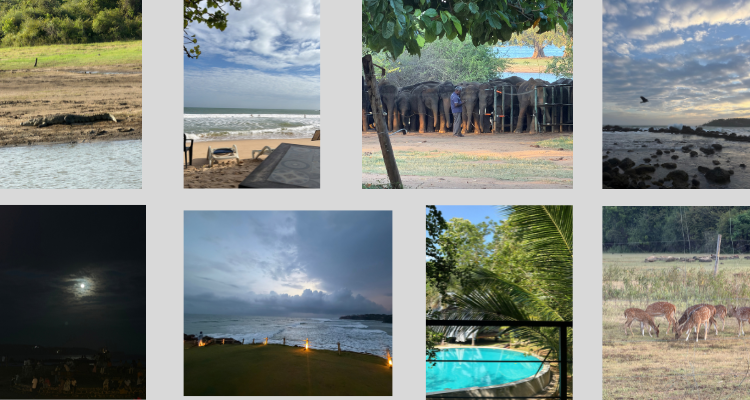

There are some journeys that you plan, and then there are journeys that simply unfold.
Sri Lanka’s travel diary belonged to the second kind. From the moment I arrived, the island seemed to move at its own gentle pace. Coconut palms swayed above narrow roads, tuk-tuks slipped through traffic, the smell of spices drifted from small cafés, and the ocean seemed to appear whenever I least expected it.
Sri Lanka was not just a destination. It was a collection of little moments—sunsets seen from unfamiliar roads, conversations with strangers, salty hair after an afternoon at the beach, cups of tea, roadside fruit stalls, and long journeys where the scenery outside the window became part of the experience.
Negombo- The First Hello
My Sri Lankan journey began in Negombo, a coastal town not far from Colombo and the international airport.
Negombo felt like an introduction rather than a destination. It was my first glimpse of Sri Lankan life—the colourful tuk-tuks, busy streets, little shops, fishing boats and, of course, the sea. The town has a strong connection with fishing, and the coastline carries the rhythm of that life. Early mornings are particularly beautiful, when fishermen return from the sea and the beach slowly begins to wake up.
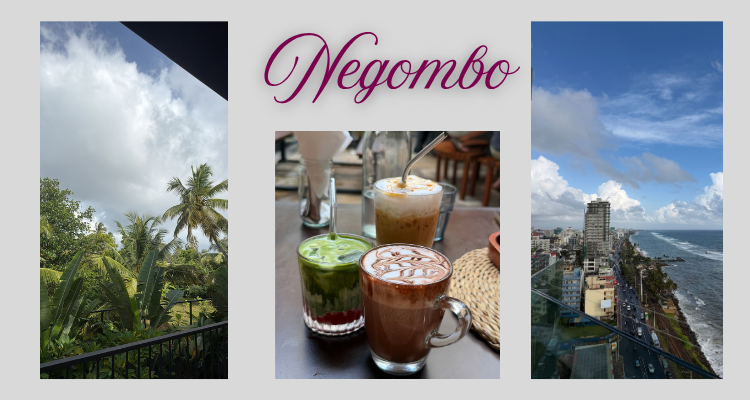
Walking around Negombo, I noticed how effortlessly old and new seemed to exist together. Churches and colonial influences stood alongside local shops and modern cafes. The streets were busy, but there was an underlying calmness to everything. And then there was the food. Sri Lanka introduced itself through flavours: coconut, curry leaves, spices, rice, seafood and an unmistakable warmth. Even a simple meal felt like part of the journey. Negombo was brief, but important. It was the moment when the trip stopped being a plan on paper and finally became real.
Weligama- Learning to Slow Down
From Negombo, the journey continued south towards Weligama.
The landscape gradually changed as the road followed the coast. Palm trees became more frequent, the ocean appeared beside the road, and the pace of life seemed to slow down. Weligama is known for its long sandy beach and surfing culture. The beach has an easy-going energy—surfers waiting for waves, travellers walking barefoot, cafes filled with people and the constant sound of the ocean. I found myself spending more time doing absolutely nothing and that was the point.
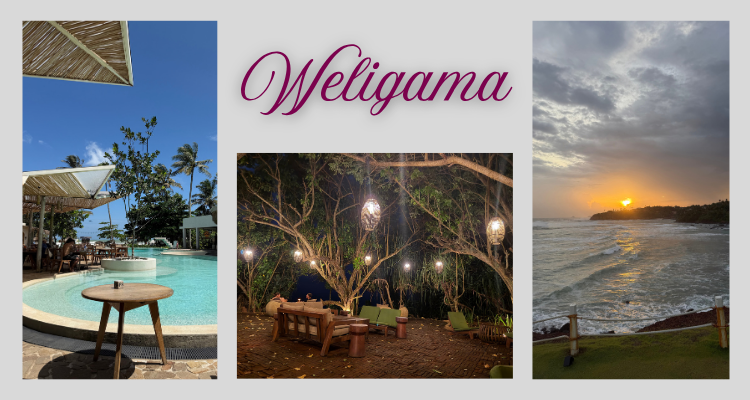
Travel often comes with an unspoken pressure to constantly see something—to visit another attraction, take another photograph or tick another place off a list. Weligama taught me the opposite. Sometimes the best travel memory is simply sitting by the sea. The evenings were especially beautiful. As the sun began to disappear, the beach transformed into shades of gold and orange. People gathered along the shore, conversations became quieter, and the ocean reflected the fading light. For a while, there was nowhere else I needed to be.
Galle-A Walk Through History
Then came Galle, one of the most fascinating stops on the journey. Unlike the relaxed beach atmosphere of Weligama, Galle felt like stepping into another chapter of Sri Lanka’s history. The heart of the city is Galle Fort, where thick historic walls surround a maze of narrow streets. Inside, old buildings, cafes, boutiques, galleries and small hotels sit alongside one another. What makes Galle special is the way history remains part of everyday life.You don’t simply visit history here.You walk through it.
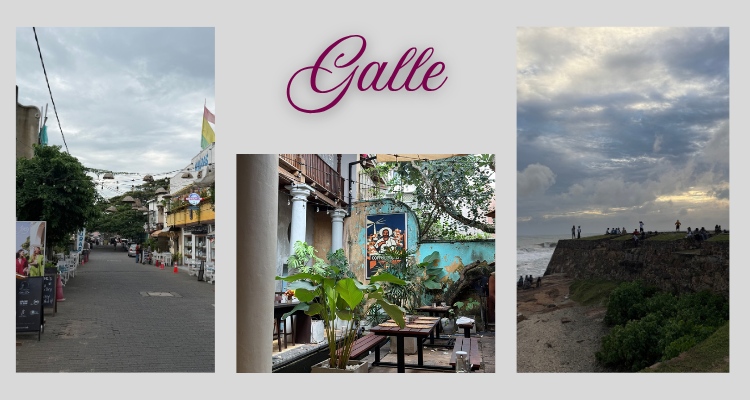
I wandered through the narrow lanes without much of a plan, stopping whenever something caught my attention. Old doors, weathered walls, small balconies and colourful windows seemed to tell stories without saying a word. The fort became especially magical towards evening. As the sun moved lower, the stone walls began to glow. People gathered along the ramparts to watch the sunset, while the ocean stretched endlessly beyond them. Standing there, I realised that some places are memorable not because of one particular monument, but because of the atmosphere they create. Galle was one of those places.
Mirissa-The Ocean in Its Happiest Form
From history, I returned to the sea. Mirissa felt playful, relaxed and effortlessly beautiful. The beach was everything I had imagined a tropical island beach would be—soft sand, swaying palms, turquoise water and little cafes overlooking the shore. But Mirissa wasn’t just about looking at the ocean. It was about experiencing it. There was swimming, walking along the beach, trying local food and watching the sky change colours as evening approached.
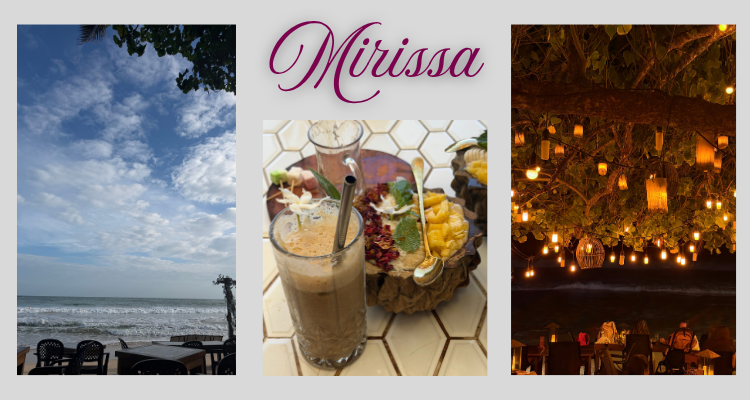
One of my favourite things about Mirissa was how uncomplicated it felt. There was no need for an elaborate plan. A beach, a good meal, music in the background and a sunset were enough. As darkness arrived, the coastline changed character. The warm lights from cafes appeared along the shore, and the sound of the waves became more noticeable.Mirissa reminded me that happiness can sometimes be wonderfully simple.
Ahangama- The Bohemian Side of Sri Lanka
A short distance away, Ahangama offered another version of Sri Lanka. It felt younger, more artistic and distinctly contemporary while still being deeply connected to the surrounding landscape.
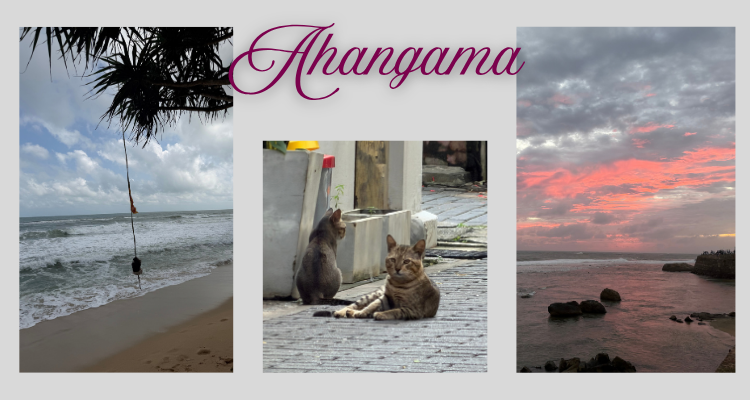
Ahangama has become known for its surf culture, cafes and relaxed atmosphere. But what I enjoyed most was the feeling of discovery. There were little places tucked away from the main road—cafes surrounded by greenery, small shops, beaches reached through narrow lanes and restaurants where strangers seemed to become friends. Ahangama was the kind of place where I could imagine staying longer than planned. There was something about its combination of tropical beauty and creative energy that made it feel different. I spent time simply exploring, taking photographs and watching everyday life happen around me. It felt less like sightseeing and more like temporarily becoming part of the place.
Udawalawe- When the Wild Takes Over
Then came one of the biggest changes in scenery. Leaving the coastline behind, I travelled towards Udawalawe. Suddenly, the sound of waves was replaced by forests, grasslands and open landscapes. Udawalawe is famous for its wildlife, particularly its elephants, and the experience of entering the national park felt completely different from everything that had come before.
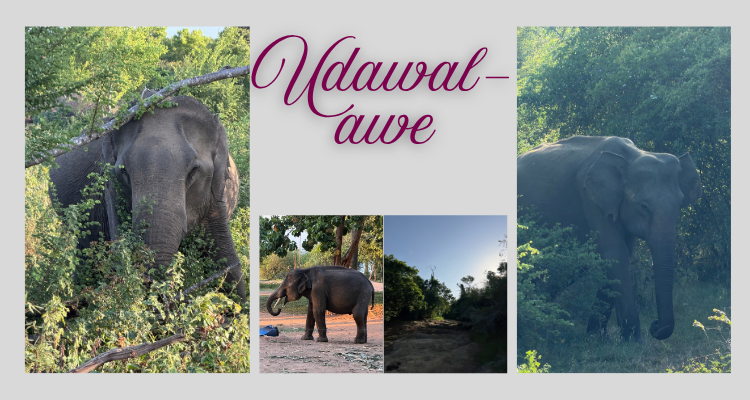
There were no colourful cafés or beach umbrellas here. Instead, there were dusty tracks, enormous trees, open plains and the possibility of encountering wildlife around every bend. The safari was less about knowing exactly what I would see and more about waiting. And then, eventually, there they were, Elephants. Seeing them in their natural surroundings was completely different from seeing wildlife behind barriers. They moved slowly across the landscape, completely unconcerned with the humans watching from a distance. For a few moments, nobody spoke. We simply watched. That silence was perhaps the most memorable part. Udawalawe reminded me that travel isn’t always about discovering something new. Sometimes it is about remembering how extraordinary the natural world already is.
A Little Piece of Sri Lanka
Travelling through Sri Lanka made me realise that a country is never just its famous landmarks. It is the smell of breakfast from a roadside cafe. It is the sound of waves hitting the shore. It is a tuk-tuk drive along the coastline. It is a sunset you weren’t expecting. It is getting slightly lost and finding something beautiful because of it. It is a conversation with someone whose name you may never remember but whose kindness stays with you. Sri Lanka gave me all of these moments. And perhaps that is what makes travel so addictive. We leave home looking for new places, but somewhere along the way, those places leave something behind inside us. Sri Lanka left behind the sound of the ocean, the warmth of its people, the colours of its streets and the memory of long roads beneath endless tropical skies. I arrived as a traveller. I left carrying a little piece of the island with me.
For more travel diaries visit us at amarasage.com